Dallas's Police Training Center Gets Its Money Stack: a $15 Million State Grant Completes $25 Million, With $17.5 Million in Private Sponsorships Behind It
The Council's vote puts the state, two private sponsors and a $20 million construction agreement behind the UNT Dallas training center — and Proposition A's $443 million bond, on Tuesday's ballot, carries part of the same project.
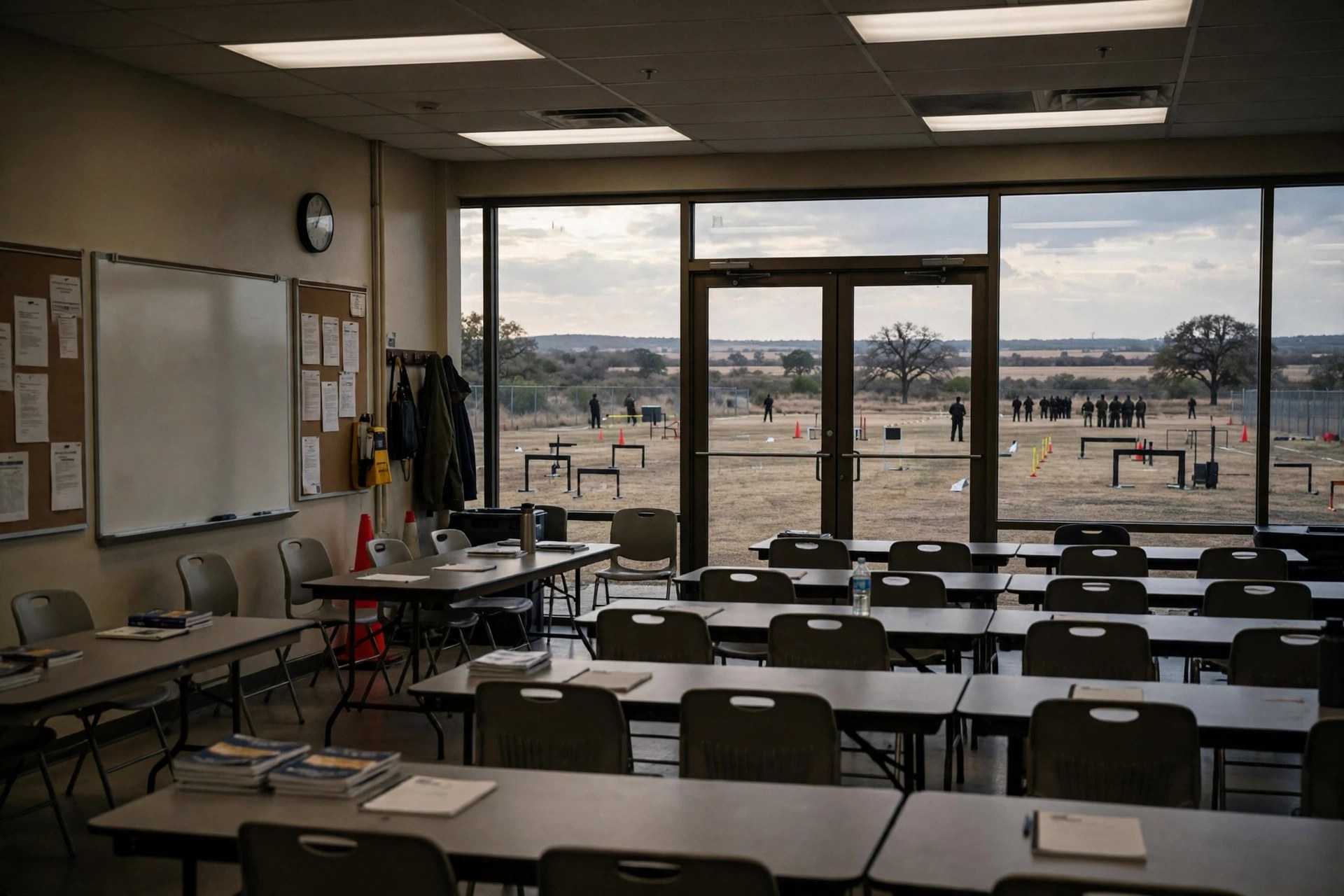
The Dallas City Council has voted to accept $15 million in state grant funding for the Dallas Police Department's planned law enforcement training center at the University of North Texas at Dallas, D Magazine reported in its Monday Leading Off — the remainder of $25 million in grant dollars from the state. The same Council action authorized formal private sponsorship agreements with QuikTrip Corp. and the W.W. Caruth Foundation totalling up to $17.5 million, and another $20 million supplemental agreement with Swinerton Builders for additional construction services. Added together, the vote assembles the training center's funding stack from three different kinds of money: state grants, private sponsorship and city construction contracts.

The project is not finished asking. The city is also asking voters to approve Proposition A, a $443 million bond in the November midterm elections, with that money earmarked in part for the city's police training facilities — which means Dallas voters will vote Tuesday on a bond that carries a share of the same training center the Council just funded from Austin and from private sponsors. That sequence is the story for a voter reading Monday's news before Tuesday's ballot: the state grant is accepted and the sponsorships are authorized regardless of Tuesday's outcome, and Proposition A decides whether the bond money joins them.
The same Council sitting filled the two offices charged with watching money like this. John Provan is the city's new auditor, responsible for making sure the city's spending is transparent and that officials are held accountable for how they spend taxpayer money, and Interim Inspector General Baron Eliason now holds that role permanently. A training center financed by a state grant, corporate and foundation sponsorships, a construction agreement and a voter-approved bond is exactly the kind of multi-source project those two offices exist to audit — and as of this week, both chairs are filled by the people who will do it.