Texas Latino Voters Could Decide the Senate Race Between Talarico and Paxton
About 6.3 million eligible Latino voters — nearly a third of the Texas electorate — broke for Trump in 2024. Poll after poll this fall says they are breaking for James Talarico now, and that is the arithmetic Ken Paxton's closing argument has to beat on Tuesday.
The most consequential voters in Texas on Tuesday may be the ones both parties spent 2024 re-learning how to read. Texas has about 6.3 million eligible Latino voters, roughly 31.7% of the electorate, according to UCLA's Latino Policy and Politics Institute, and the polling consensus this fall is that a bloc that swung toward Donald Trump two years ago is swinging toward Democrat James Talarico in his Senate race against Republican Attorney General Ken Paxton. Decision Desk HQ's polling average puts Talarico ahead among Latino voters 54.8% to 32.1%, CBS News found nearly 60% of Hispanic voters in its latest poll backing Talarico, and Emerson College Polling's Spencer Kimball summarized the movement plainly: Texas Hispanic voters who broke for Trump in 2024 now break for Talarico by 15 points.

The overall race remains a genuine toss-up, and the story says so because the polls do. CBS News/YouGov, surveying 1,492 registered Texans from October 8 to 16, found Talarico at 51% and Paxton at 49% overall; a Texas Southern University poll of 2,000 likely voters from October 21 to 25, with a margin of error of 2.19 points, found Talarico at 49% and Paxton at 47%. Decision Desk HQ's forecast gives Talarico a 59% chance of winning — a lean, not a lock. With Republicans holding a 53-47 Senate majority, a Democratic win in Texas would complicate the national math on Wednesday morning, which is why a state race is drawing national money and national attention.
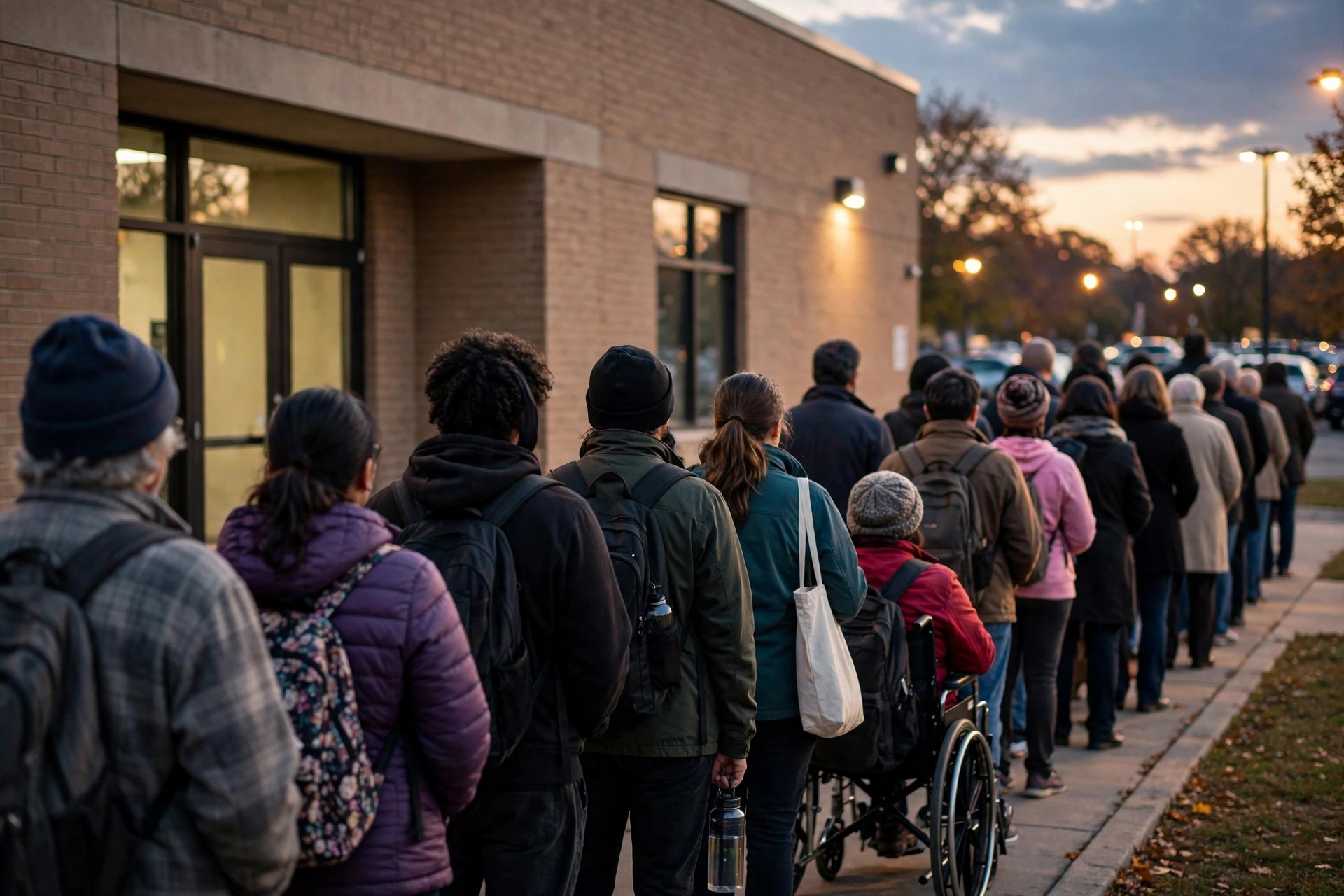
What to watch on Tuesday is turnout, not just preference. The three tells, on the reporting read this cycle, are Latino turnout on Election Day itself, the margins in the Rio Grande Valley, and how large the Democratic edge runs in Dallas and Travis Counties — against a practical headwind CBS Texas has flagged: Texas has more than 500 fewer Election Day polling locations than it did in 2018, which can mean longer lines in exactly the neighborhoods both campaigns need. Early voting already drew 7.7 million Texans. The voters who decide this race are the ones who have not voted yet.